Insights
Most merch gets thrown away. That is decided in the brief
Branded merchandise, corporate gifts and company apparel mostly have short lives, and the printing is rarely the reason. The object was designed to carry a mark instead of being designed to be owned.
A branded object has a harder job than a film. A film has to hold attention for sixty seconds, once, in a context somebody else chose. A hoodie has to beat the other hoodies in a wardrobe, on an ordinary Tuesday, for years. Most branded merchandise does not survive that, and when it fails the printing is almost never what went wrong.
There is a blunt test for whether an object will last. Would anybody have paid for it with the mark taken off? If not, then the mark is the only reason the thing exists, and the person who owns it knows that.
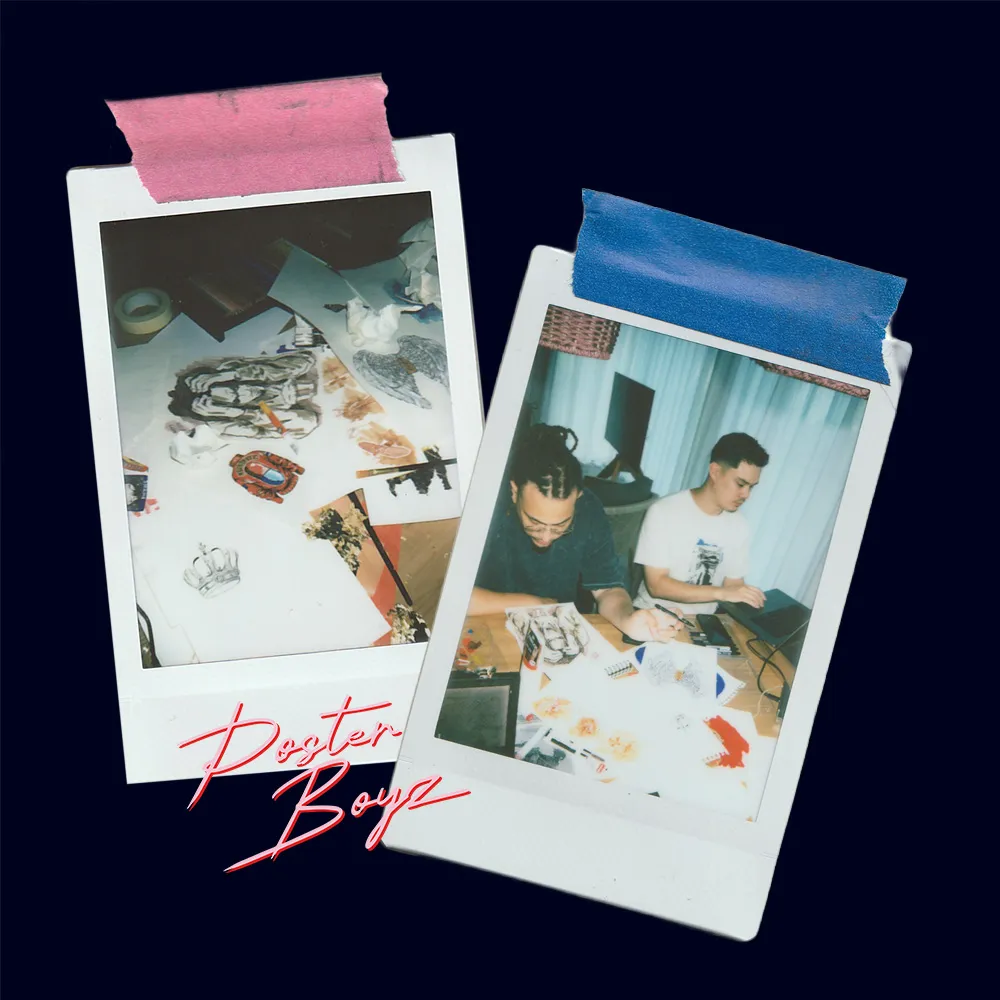
Posterboyz Studio is where we had to answer that question properly, because it is our own merchandising company and nobody commissioned any of it. Everything in that store carries a price, so the audience answers with money instead of politeness. The collaboration with Takumi Ramen Kitchen was ten pieces built around another maker’s drawings and his lettering, sold in two drops a year apart, and nothing is left from the first one. The release of Fresku’s Leren Leven sold over 800 LPs and over 300 copies of a book about how the album was made. A logo on a blank garment does not do that. The artwork was the product, and the brand came along with it.
Most merchandise is given away rather than sold, which does not make the test easier. It removes the one moment where somebody had to commit, so the honest version of the question is whether they would have.
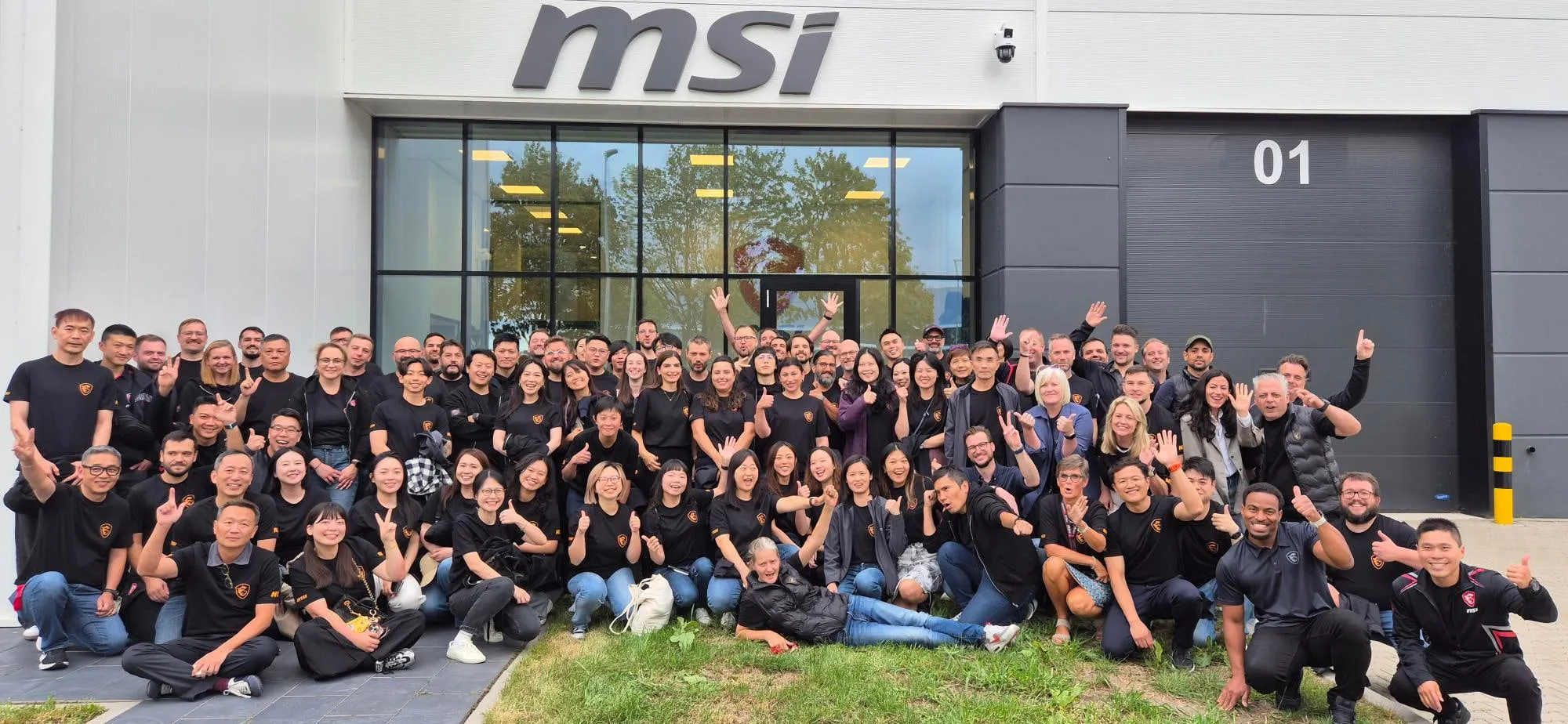
For MSI we handled company apparel while the new Eindhoven headquarters is being built: polos for the board at the first pile in the sand, shirts for the whole team at the Helmond site, then a run for Germany. Over 350 shirts across five production runs in two countries. The logo sits small on the chest, and it is not the reason anyone wore the shirt. On the back there is an orange windmill above a single word, Hoi!, which is how you say hello in Dutch. That is a shirt people kept on for the drinks in the courtyard after the warehouse tour, which is a different object from a uniform that comes off in the car park.
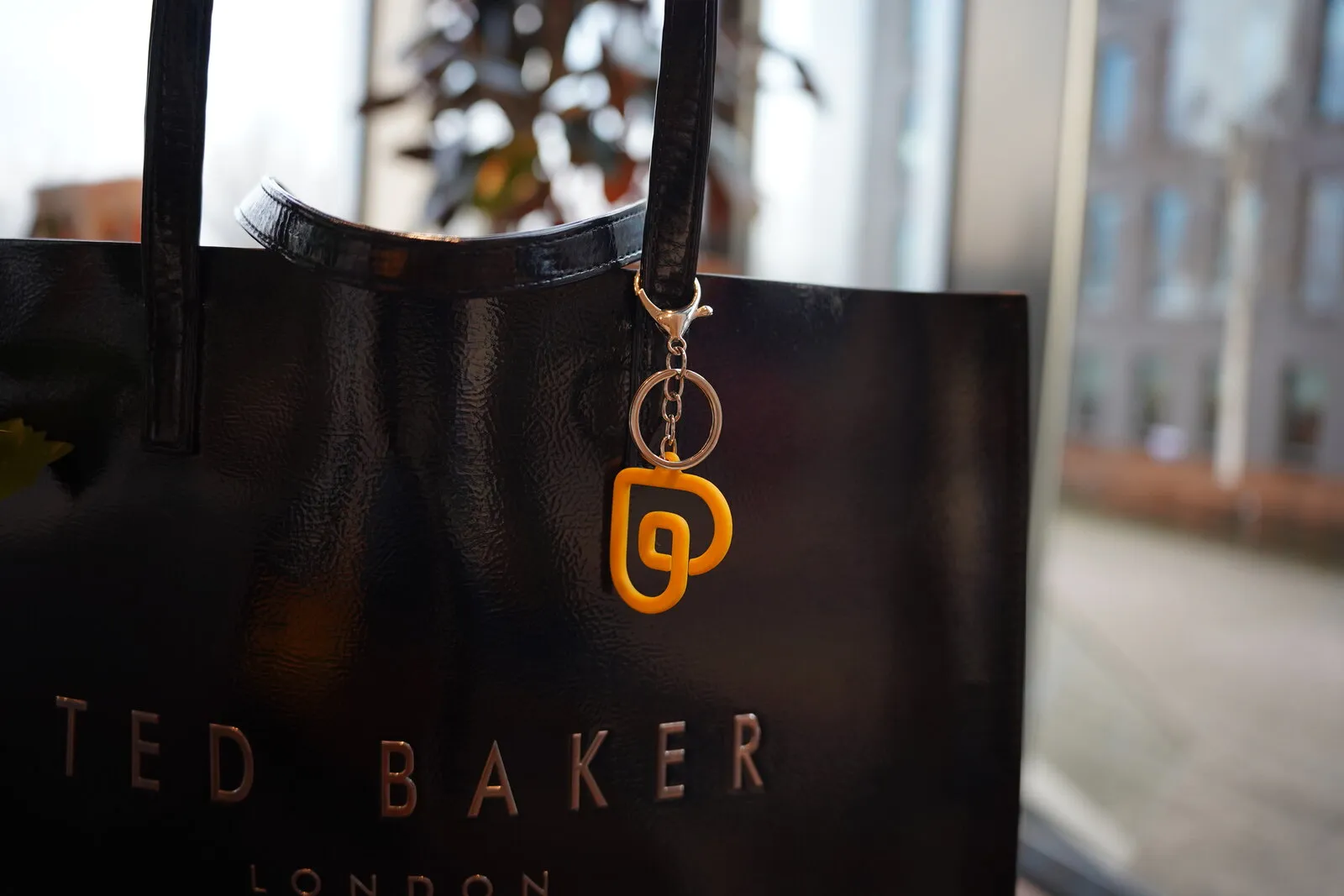
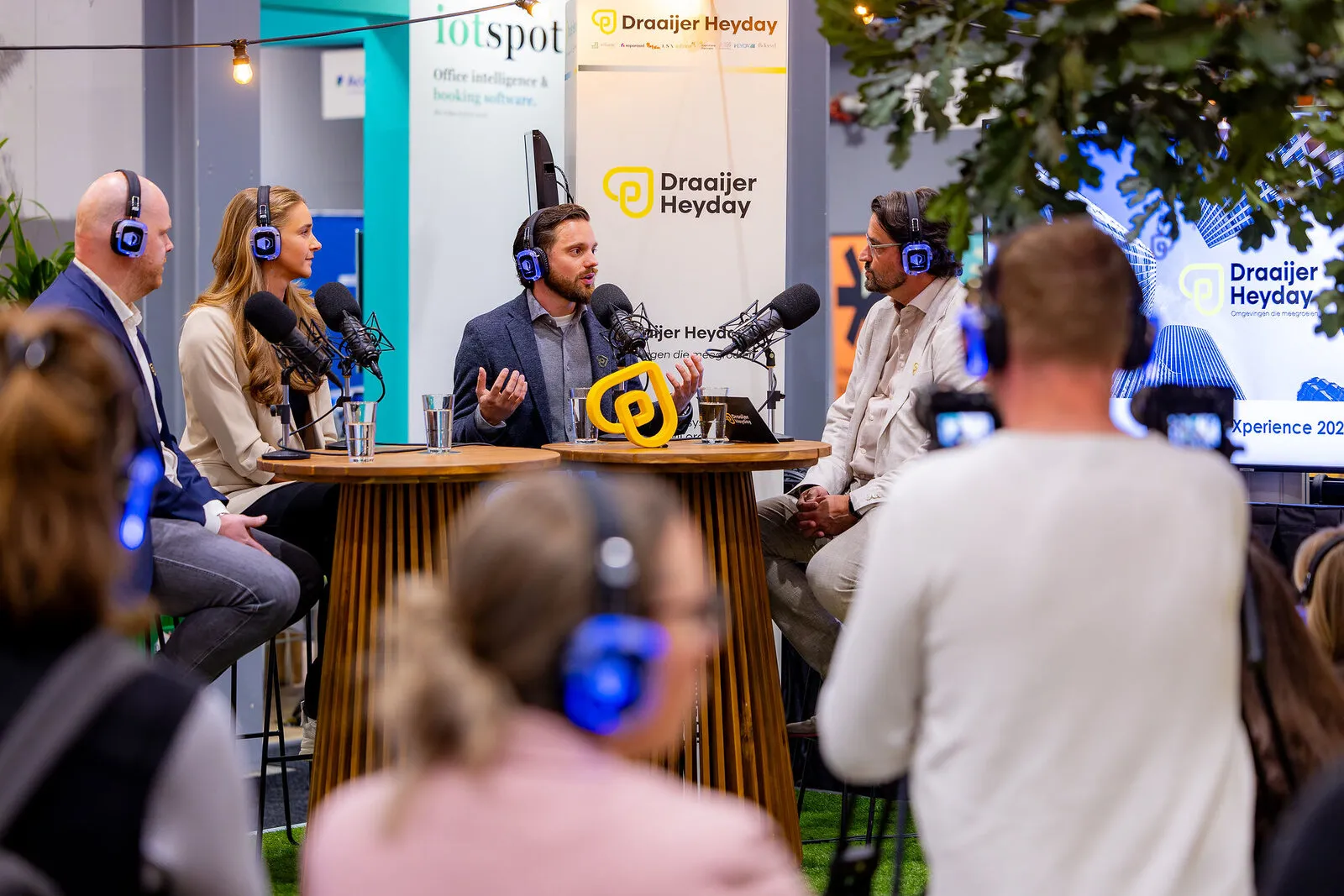
Draaijer Heyday took the idea further than we expected it to go. We produced 852 3D printed pieces for them across four brands, and the keychains are cut in the shape of the brand mark itself. There is no printed surface, so there is nothing to peel off and nothing to wear through. Each label got its own shape in its own colour: the Bonder name in coral, a burgundy star for Beleevd, the Exploitatie Partners mark in green. A larger print of the same mark sat between the microphones while they recorded their podcast live on their stand at Workplace Xperience in Utrecht, so the thing on the table and the thing in a visitor’s pocket were one object at two sizes. Trade show giveaways normally end up in a hotel bin a day later. These went onto people’s keys.
None of this is complicated, and it is not really about merchandise either. A brief for branded objects almost always specifies the mark in detail: placement, size, which colour variant, across how many units. It rarely specifies the object with the same care, and the object is the part that decides whether any of the rest of it ever gets looked at again. That belongs in the brief next to everything else worth asking: what is the thing, who would want one, and where will it be in a year.
Put a logo on something nobody wants and you have paid to be thrown away.
Related cases
Product & Craft
Posterboyz Studio
A merchandising company we started with artist Fresku and still run: brand, products, webshop, and the royalties portal that pays every artist selling through it.
Product & Craft
MSI
Company apparel for MSI: polos for the first pile of the new Eindhoven headquarters, custom printed T-shirts for the whole team in Helmond, and a run for Germany.
Product & Craft
Draaijer Heyday
Custom 3D printed logo keychains, the Workplace Xperience 2026 aftermovie and 150 custom hoodies for Draaijer Heyday and its labels.
More insights
19 October 2026
Nobody notices the colour grade. Everybody sees it
The work that decides whether a film reads as expensive is work a viewer has no words for, which is also why it is the first thing to come out of a budget.
1 September 2026
You are not paying for the frames. You are paying for the setup
The instinct is to order fewer deliverables to keep a shoot affordable. It usually costs more. The expensive part of a production day is standing it up, not using it.
13 August 2026
The best brief is not a solution in disguise
Most briefs already contain the answer. The ones that get you better work start somewhere else: with the problem, not the fix.
Let's work together
Fifteen minutes, no deck. Bring the product and we'll tell you honestly what we'd do with it.
← All insights